Saturday, May 28, 2011

Congratulations, Mr. Facebook!

As some of you meat news followers may have heard, Facebook founder Mark Zuckerberg has just announced that he will eat only animals he has personally slaughtered. The Butcher's Guild is thrilled with this news and we've invited Mr. Social Network himself to join our ranks. This move toward accountability and responsibility for the food we eat is something most of us cutters take very seriously. Whole animal butchery is what this guild is all about, but before we get to the blood-stained aprons and fat-covered knives, somebody's got to make that fatal blow (or cut). Due to USDA regulations, most butchers and chefs don't get to take part in this process. Conversely, many processors don't get to follow their products all the way to the table. For Mr. Zuckerberg to take on this challenge is an inspiration for all of us to become even more connected to the cycle of life that feeds us and the sober moment that is a requisite element in that cycle, and we here at The Butcher's Guild applaud his efforts.

BG founders Tia Harrison and Marissa Guggiana sent this invitation soon after news broke. We certainly hope Mark Zuckerberg takes us up on the offer to join the most cutting-edge meat cutters in the country!

Dear Mr. Zuckerberg,

The Butcher’s Guild, a national organization uniting sustainability-minded butchers and eaters, is honored to number you among the enlightened carnivores. We want to celebrate your commitment to conscious eating with an invitation to join our guild. This membership will link you to our network of the great butchers and whole-animal chefs of the country to help you find a path to your protein and plate with recipes, butchery lessons and techniques.

Congratulations on this meaty mission to further your personal growth. If you kill it, you need to cut it, cure it and cook it.

We’re here for you,

Tia Harrison and Marissa Guggiana, Founders, The Butcher’s Guild


We'll be waiting for Mr. Zuckerberg's response. Click on this post's title to be linked to a news article and video!

There are also a few new videos up in the sidebar, including a couple from the NC Choices Conference!

Wednesday, May 18, 2011

Meet The Butcher's Guild!


Gaetano Arnone-
Dickson Farmstand New York, New York
http://dicksonsfarmstand.com/


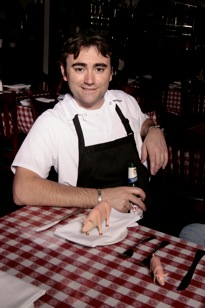
Gaetano Arnone found butchery at his family's restaurant in Orange, California as a way to save money when his father took ill and he found himself running a restaurant. After studying under the guidance of Master Butcher Dario Cecchini in Tuscany, Gaetano returned to the states and is now the butcher at Dickson Farmstand in New York City, where he continues his goal of communicating to butchers and carnivores the traditions and craft that he has come to respect and love. ----BG Co-founder Tia Harrison

How long have you been a butcher and where did you get your start? Have you been working with "sustainable" meats the whole time and if not, what precipitated your shift in practices?

I began butchering at my father's restaurant about 6 years ago after he took ill and we had to save money. I went to a market I worked at in high school where I remembered seeing whole animals in the walk-in and being frightened. I asked if I could come in on my off hours and learn. When I arrived I saw the walk-in this time nearly empty with only boxes of bagged meat on shelves. The older butchers had all since retired and there was no one to show me how to break down the animals I was working with. I was truly cutting blind for some time. Figuring it out as I went along. I hand no other choice.

After seeking out the help of other great chefs and butchers, first with Ryan Farr of 4505 Meats in San Francisco and then in Tuscany with my Maestro Dario Cecchini, I saw what good and sustainable meat was. After that there was no turning back and I could only work with meat that I felt was raised in the best possible methods and traditions, both for the animal and the farmer.

What do you think about the current media hype and attention on butchery, butchers and meat in general?

Any attention to traditional butchery in my humble opinion is good as long as it promotes the connection between the butcher and the consumer. There are times when I'm approached to show someone or a group of people how to cut and it's a bit of a dance to see if they're really interested in what it is we do and want to learn where their food comes from, or if they just want a picture of themselves holding a pig head. Granted it's a cool picture but that's not why I got into this work.

What do you believe is the role butchers in the movement for a sustainable food system and what do you see as the biggest impediment to a truly sustainable meat industry?

Education. The majority of my customers truly do want to know where the food they eat comes from. Butchers work as a conduit to the farmers who, like me, are friends to animals. It's our job to not only educate them on the providence of the animal but also to work with them and their skill set to make sure that the positive experience they have in the shop is continued through the cooking process and eventually to when the meat hits the table. As Dario says, "That animal already died once. Now make sure they don't go home and kill it again."

The biggest impediment I see, again, is education. Once the consumer begins to know what good meat is and how to make it a part of their lifestyle, the producers will have to give the people what they want. If almost everyone can find a way to buy an iphone because they want one, than we just need to let them know how much they'll love good, humanly raised, sustainable meat.

What does being a member of The Butcher's Guild mean to you?
I remember that first whole pig I had delivered to my family's restaurant and how lost I felt. I still think about that pig and hope one day in the great beyond I can apologize for the poor job I did. After that day I knew I needed help and wasn't sure where to go. I know there are others out there like me that are looking for help and The Butcher's Guild is that resource. I see the names on the list of charter members and I'm humbled and honored to be involved.

Your absolute favorite cut and preparation method/recipe:
It changes from time to time but right now it's the Tagliata. It's an Italian cut that translates to "The Cut". I like to cut mine from the peeled knuckle into about an 8 oz. rectangle. Then very simply rub the meat with a nice Tuscan olive oil that has a grassy note to it and season with fresh cracked pepper and sea salt. Give it a quick sear on each side for just a minute or so for color, then put it into a 400 degree oven for only about 6-8 minutes. Let rest, cut into strips, and drizzle with the same olive oil and salt.

It's a simple cut, inexpensive, and easy enough for most apartment living New Yorkers to cook without a grill. It's the perfect beginner steak and opens the door that friendship and trust between the butcher and the customer.

Thanks, Gaetano!

Thursday, May 5, 2011

BG Charter Members in Action

Now that we've started to put some faces to the Butcher's Guild name, check out some of the new and exciting projects involving BG members!

*Kari Underly has just announced the August release of her Bible of Beef, titled "The Art of Beef Cutting" and will be doing a beef breakdown next Wednesday, May 11th as part of the 2011 Beef Boot Camp at the Amherst Courtyard Marriott.

*Amelia Posada and Erika Nakamura are rocking it hard in the first few weeks after opening their long-awaited butcher shop in LA. They've even had a few days where they sold out of EVERYTHING! Awesome! Lindy & Grundy is bringing good meat to LA and we're more than proud of these two charter members. Catch up with them in Vegas for All-Star Cochon in July!

*Berlin Reed of The Ethical Butcher, is setting out on a full season of farm-to-table dinners and whole animal-centric events. He'll be traveling to cities from Sitka, AK to Atlanta to Boston from June through November meeting and collaborating with BG members and other great folks in the good food biz.

*The ladies at Avedano's have taken pastured and local meats back to the old school with their new meat boxes. Just like the days when you could walk in and find a great deal on local meat, they've got boxes to fit every budget and palate! Tia Harrison, Angela Wilson, Melanie Eisemann and Dave the Butcher keep SF in good meat from their perch in Bernal Heights. Check them out if you find yourself in their neck of the woods!

*Chef Craig Deihl is currently making his way around New York City as one of this year's James Beard nominees! Congrats to Craig!

*BG friend, butcher Cole Ward, has a great and informative DVD out called "The Gourmet Butcher". Good techniques from a seasoned butcher will show you how to break down pork, lamb, beef and more!

Send all your meaty happenings to theethicalbutcher@gmail.com and we'll get them up here!


Thursday, April 28, 2011

The Butcher's Guild Hall of Butchers

As more of our charter members join, The Guild will be honoring esteemed colleagues of its ranks by gifting special membership to its Hall of Butchers. These are butchers and meat scholars with deep experience and unquestionable authority who take a strong stand for education. These experts strongly represent the tenets of the Butcher’s Guild oath, particularly, the “hand” and “voice” elements. As the gatekeeper’s to a wealth of knowledge and history of this trade, they do much to further and improve it by passing their skills on to others. They shape the industry and exemplify the lifelong mastery of skill that defines the craft of whole animal butchery. We believe this vast experience and proven leadership in this industry warrants a special designation among the cutters, curers and creators of The Butcher’s Guild.

We are proud to introduce our very first Hall of Butchers inductee, Dr. Gregg Rentfrow, Professor & Extension Meat Specialist at the University of Kentucky. As mentioned in this post about the Carolina Meat Conference, Dr. Gregg Rentfrow was one of the most outstanding folks we had the pleasure of meeting and working with. Tia, Marissa and I were in awe of the calm and relaxed way in which Dr. Gregg not only possesses immense knowledge of meat science but the personable and approachable way in which he shares it. We were rapt with attention as he taught classes right next to our teaching area. Often one of us saying to the other, “Did you just hear that?” or “Hmm, I didn’t know that” as we listened through the curtains separating our "classrooms". Everything from great information about the effect of bandsaws on myoglobin to the best jokes we heard all weekend, one might say the Guild was more than captivated by Dr. Rentfrow’s presence at the conference. Personally, Dr. Rentfrow inspires me to continue seeking a more academic approach to the industry and ways to improve it. A dedicated and long educational journey to dig deep into this complex field of study combined with the applied theory and practical base of real experience cutting is the holy grail in my book.

Dr. Gregg was just given the Outstanding Service to Kentucky’s Beef Industry Award by Kentucky Cattlemen’s Association and the American Meat Science Association honored him with their Achievement Award. Dr. Rentfrow is active in the American Meat Science Association, the American Society of Animal Science, the National Country Ham Association, the Mid-State Meat Processors Association and the Kentucky Country Ham Producers Association. Dr. Gregg’s coolness runs even deeper! When he’s not teaching the next generation of industry professionals or working to improve the industry as a whole, you can find him riding his Harley-Davidson and competing in powerlifting meets throughout the Southeast and the Midwest.

The Butcher’s Guild humbly introduces our first Hall of Butchers Member, Dr. Gregg Rentfrow.
Interview by BG Co-founder Tia Harrison.

Dr. Gregg Rentfrow, Ph.D.
University of Kentucky

How long have you been a butcher and where did you get your start?

I started in 1987 in the meat department of the local IGA in my hometown of Shelbyville, IL. I started at the bottom, grinding hamburger and helping the cutters package, overwrap, and label everything. Eventually I worked my way up to a meat cutter, head meat cutter, assistant meat market manager, meat market manager, and zone meat manager for three different retail companies. I ended my retail career with Wal-Mart Supercenters, during the time of the initial explosion of those stores. There, I trained other meat cutters and helped open the new stores. I even served as Interim Meat Lab Manager at Mizzou while working on my Ph.D.

Tell us about what you do now, how did you become a meat scientist?

My appointment at the University of Kentucky is 80% Extension, 20% Teaching. I work closely with the meat industry in Kentucky and the Southeast, which includes everyone from the small, family owned custom butcher shops to the large meat processors harvesting 1200 pigs an hour. Kentucky may be famous for fast horses and smooth bourbon, but we are also know for our country hams. We have several country ham curers that produce products that can be found throughout the Southeast.

I have two major marquee programs, the University of Kentucky Meat Cutting School and the Food Systems Innovation Center. We have trained over 300 retail meat cutters, over 50 foodies, and over 100 chefs at the UK Meat Cutting School. The Food Systems Innovation Center is geared to provide affordable research and development for small and medium sized food entrepreneurs. We are still in the beginnings of this program, but so far we have helped over 50 products make it to the market place or expand into larger markets.

How I became a meat scientist; originally I wanted to follow in my dad’s footsteps and teach high school agriculture, but the draw of meats kept sucking me back in. I went to junior college, dropped out for a couple years, went back to salvage my GPA enough to transfer to the University of Illinois and major in Animal Science with a Meat Science specialty. I earned my masters in meat science at the U of I, researching the effects of feeding high levels of vitamin D and E on beef quality. After my MS, I transferred to the University of Missouri and earned my PhD in Meat Science and Muscle Biology by studying the effects of postmortem glycogen metabolism on meat quality. I graduated in 1997 with my BS and earned my PhD in 2005, so it has been a long road to become a meat scientist.


What do you think about the current media hype and attention on butchery, butchers and meat in general?

Someone told me that butchers were the new celebrity chefs and the new sex symbol of the food industry. I told the guys in the meats lab about the sex symbol part and they are planning a calendar for next year. I think the old is new again; people are becoming more interested in food and wanting to know more about their food. I feel the biggest challenge facing us in the meat industry is destroying the vast amount of misleading information and internet rumors about meat. I’ve heard some really crazy things over the years, from the ridiculous to the asinine. Regardless of what the media and the internet says, we produce the most wholesome, safest meat and food supply in the world. We have other countries coming to America to learn our food safety regulations and practices. I have trained several people for several different countries on safe food handling and HACCP. I think we need to tell our story and address this misinformation.

What do you believe is the role butchers in the movement for a sustainable food system and what do you see as the biggest impediment to a truly sustainable meat industry?

We are in an unique time in our history; we have more disposable income to spend on a wider variety of foods than ever before. As I said before the old is new, and a well trained, artistic butcher can only help to accelerate the local meat movement and the world meat movement. When I say a well trained, artistic butcher, I mean someone who knows how to properly cook a piece of meat and can recommend a good recipe, knows the science behind the meat, and takes enough pride in their craft that each piece of meat looks like it jumped off of a magazine cover. This is what we need for the meats industry, regardless of local, sustainable, or global. There’s room on the table for everyone; we need the artistic butchers to remind us of what meat can be and we need the large guys to feed the world.

What does being an honored member of The Butcher's Guild mean to you?

I’m not a wordsmith and my wife will tell you that I don’t communicate my feelings very well, but when I say that words cannot explain the honor, I mean it. It was so great to meet people with the same goal that I have, which is to bring back the local, knowledgeable, respectable butcher. Fictional characters like Sam the butcher (Brady Bunch) or Alex the butcher (Kroger) come to mind when I think of this person. And I feel we are bringing back these images. Hopefully we can remove the image of guy in a red stained apron with the mean look on his face. I really believe in what the Butcher’s Guild is doing and I am extremely humbled by being an honored member.

Your absolute favorite cut and preparation method/recipe:

Favorite cut… tough one for a fat guy to narrow down. You cannot go wrong with a well marbled beef top loin steak, cut a butcher’s inch thick, lightly seasoned with salt, fresh ground black pepper, and garlic powder, cooked on the grill just to the point where a good vet cannot save it. I have been experimenting with smoking these cuts in my new smokehouse at home with some tasty results. Or a good slice of country ham cooked 45 seconds to a minute per side on the grill. As you can see, I’m very much for lightly seasoned and not over cooked, we over season and cook everything

Thursday, April 14, 2011

Meet The Butcher's Guild!


Angela Wilson
Avedano’s Holly Park Market - Owner
San Francisco, CA


How long have you been a butcher and where did you get your start? Have you been working with "sustainable" meats the whole time and if not, what precipitated your shift in practices?

I have been a cook since I was 20 years old. I have been a butcher since I was 40 years old. I opened Avedano's when I was 37 years old with a cook's knowledge of meat, using my intuition about what is right. I wanted to sell meat I feel good about selling. Utilizing and selling whole animals is the best way Avedano's can support small farmers in our area while at the same time helping to create a great dinner in our customer's homes.


What do you think about the current media hype and attention on butchery, butchers and meat in general?

I THINK people want to know where their food comes from. I think people are ready to face the fact that meat is an animal, who once lived. I think people are hungry, thinking past the supermarket and neatly packaged cuts to life on a farm. These farms are struggling, butcher shops are struggling, everybody is struggling, they can relate. I don't know if the interest in meat and animals and butchering would be possible during the boom of dot com; with this bad economy, it is back to the basics of life.


What do you believe is the role butchers in the movement for a sustainable food system and what do you see as the biggest impediment to a truly sustainable meat industry?

A butcher can dedicate her/himself to small farms, using whole animals. A butcher can educate the customer about different cuts so it doesn't matter if you use shanks or neck or shoulder in a recipe. At Avedano's, we cut two lambs a week so we have to recommend alternatives. Lack of a local slaughter house is a big stumbling block for sustainable meat. Also, as a butcher shop owner, it is not economical to cut and sell sides of beef, we break even.


What does being a member of The Butcher's Guild mean to you?

Being a member of the Butcher's Guild means being part of a community of like-minded people who want small farms to thrive, small business to thrive and to live a life worth living.


Your absolute favorite cut and preparation method/recipe:

Lamb neck:

Peeled and cleaned. Oven 400 degrees. Rub with a tiny bit olive oil, salt, pepper and place in dutch oven for 2-3 hours. Fall off the bone delicious.

Short, simple and to the point, that lamb neck recipe sounds incredible! Thanks, Angela!

Friday, April 8, 2011

Meet The Butcher's Friday Feast!


Tia Harrison
Co-founder of The Butcher’s Guild
Executive Chef at Sociale
Owner of Avedano’s Holly Park Market
San Francisco, CA


What does being the founder The Butcher's Guild mean to you?

Co-Founding The Butcher's Guild has been an amazingly inspirational experience. The Guild was created to do what guilds do. To create a support system for meat professionals, to preserve the craft of butchery and to adhere to a moral code. To create rewards and recognition for our heritage, integrity and community is where I want to spend my energy and passion. I often think about the fact that most of the people who are butchering right now are doing it because they want to give their customers tastier, more nourishing meat. They want to use their hands to create something really special and support a farmer that is doing it right. These things deserve consumer support and I feel we need to help create that. The Guild's purpose is natural and genuine and reveals itself to me through every conversation, experience and friend I make in the industry.


How long have you been a butcher and where did you get your start? Have you been working with "sustainable" meats the whole time and if not, what precipitated your shift in practices?


I am Executive Chef and co-owner of Sociale Restaurant, and co-owner of Avedano's, a neighborhood butcher shop. I started butchering when we opened Avedano's. I spent six months freezing in a walk-in cooler "working" it out. I had no idea what I was in for, but I had years of working with the end result in my restaurant. All I had to do is figure out how to put it back together in my mind, then break it down and make it look better, right? Not quite. I am really lucky, I have had many great teachers. I have massive respect for butchers and cutters and I will always remain on the path of continuing to educate myself.

When I started cooking fifteen years ago, consumers were not asking questions about where their food came from. My shift to working with more "sustainable" meats came about as a natural result of constantly working to hone in on the best, most delicious products available and tell my customers where they came from.


What do you think about the current media hype and attention on butchery, butchers and meat in general?

I think consumers want to be able to make choices and have sufficient information to do so. The many years prior, void of this knowledge, just didn't feel right. Now discerning consumers are asking better questions. As butchers, we play a big role in getting this information to our customers. We are in the position to create consumer trust through honest labeling and product education. We can help our customers try new cuts of meat or preparations. I think it's huge and deserves attention.


What do you believe is the role butchers in the movement for a sustainable food system and what do you see as the biggest impediment to a truly sustainable meat industry?

I believe one of the most important roles of being a butcher now is consumer education. I think it is paramount to the success of professionals who source and break animals from small, local farms. We are dealing with an industry of unforgiving margins and short shelf life. We really need to focus on the details, crunch the numbers to ensure that we are profitable and use all of the animal. Consumers need to understand why it costs more to shop with a local butcher than at a chain supermarket. And more importantly, why it matters.


Your absolute favorite cut and preparation method/recipe:

It depends on the meal. I really can't say that I love flap meat or skirt steak better than, say, pork shoulder because that would make me a liar. I will say I love to quick grill and braise though- either cook it fast and rare, or slow and soft. Sounds like me: no middle ground.


Thanks tons, Tia! I’ve actually got a nice pork shoulder recipe for today’s Friday Feast!

Just as Tia said, pork shoulder is all about “slow and soft”. This melt in your mouth braised shoulder will make great pulled pork if you let it go long enough, if you’d prefer a sliceable roast, simply pull the shoulder out when it reaches an internal temp of 160 degrees F and allow to rest before cutting to keep in all those luscious juices! I've tried it with all types of whiskey and this floral/herbal rub is always a hit!


Woodland Herb Pork Shoulder

pork-
5-6 lbs bone-in pork shoulder
1 tsp. chopped pine needles, from the green tips of new growth.
1 tbs. lavender
1 tbs. juniper berries
1/2 tsp ground star anise
1 tbs fresh sage
1/3 c. maple syrup
1 tbs. kosher salt
white pepper

whiskey-maple glaze for basting-
1/3 c. maple syrup
2 tbs. whiskey
pinch lavender
pinch pepper

May be marinated up to 3 days, the longer the better. Place shoulder in large bowl or on large baking sheet. Pour maple syrup over entire shoulder, making sure to get in all crevices. In a small bowl, mix kosher salt and all other ingredients, rub on shoulder in same manner as maple syrup. Cover with plastic wrap and refrigerate for 12-36 hours.

Remove from fridge and allow to return to near room temp while oven heats to 350 degrees. Once shoulder has lost its chill, heat a large preferably cast-iron skillet. If you do not have a pan that can go from stove to oven, you'll need both a skillet and roasting pan.

Heat the skillet on medium-high and when hot, place shoulder in pan fat side down and sear to a dark caramel. Sear on both sides then place shoulder fat side up. Baste with small amount of glaze. Move skillet from the stove to the oven, or move to roasting pan and then oven if necessary. Roast to an internal temp of 160 degrees F, about 2.5 hours. If you would like more of a pulled pork consistency, roast to 190-200 degrees F. During last hour of roasting, baste shoulder in glaze every 10-15 minutes. Baste with remainder of glaze immediately upon removing from oven. Let rest 10 minutes before carving. Serve with veggie sides and a starch, or make a nice herbaceous twist on a pulled pork sammy by whipping up a tangy mustard-vinegar sauce and slapping all this goodness on a fresh roll with slaw.


Enjoy!

Thursday, April 7, 2011

Meet The Butcher's Guild!

I am so happy to post this introduction!
Meet Marissa Guggiana, co-founder of Butcher's Guild!


Marissa Guggiana
Berkeley, CA


How long have you been a butcher and where did you get your start? Have you been working with “sustainable” meats the whole time and if not, what precipitated your shift in practices?

I began running Sonoma Direct, a USDA-inspected wholesale meat processor, in 2005. I am not a butcher myself but know well the challenges and rewards of the meat industry through running a business, trying to make a profit and make a difference. When we opened, we were only butchering large quantities of imported meat and selling cuts to hotels in Vegas, by the truckload. My curiosity and conscience led us to a model of working only with local farms and customers.


What do you think about the current media hype and attention on butchery, butchers and meat in general?

Fascination is a good thing. It can only help to make a permanent shift in our eating habits. Butchery is hard work and requires a great deal of skill and intelligence to be profitable. Renewed appreciation for this work is appropriate and heartening.


What do you believe is the role of butchers in the movement for a sustainable food system and what do you see as the biggest impediment to a truly sustainable meat industry?

Our food system has centralized for reasons that are hard to combat- financially and logistically, it makes sense to centralize, if you are going to feed a large population cheaply. But, as anyone who studies systems understands, diversity is important- in business and in nature. We need alternative routes to nourishment and we need these local food systems to be viable for everyone on the food chain. Butchers are the key to getting meat from farms to tables. They hold the knowledge to turn animals into protein and to instruct us in how to prepare that meat. So many of us have lost the will or knowledge to cook and butchers are helping to restore that knowledge.


What does being a member of The Butcher's Guild mean to you?

Starting The Butcher's Guild is the dream of being able to support all the talented and committed butchers and meat pros. When I was writing Primal Cuts: Cooking With America's Best Butchers, i learned so much about the struggles of others'. Even many of our most famous and inventive meat people are challenged to make money and stay afloat. I want this industry to be here in ten years! I hope The Butcher's Guild will have a hand in distributing the collective wisdom and solutions so that we can all thrive.


Your absolute favorite cut and preparation method/recipe:

The best cut is the one I am eating! I like to spread the love around. But when it comes to cooking at home, I love shoulders- beef chuck, pork butt and lamb shoulder. I am a braiser and relish the cuts that can stand up to the long heat.


Thanks, Marissa! Can't wait to get Tia's intro up as well!
It's finally time for another Friday Feast! I've got a good one for tomorrow that would fit right into Marissa's favorite cuts category.